

Butter Market to Reach US$ 14.68 Billion by 2035 as Premium Dairy Consumption and Clean-Label Trends Accelerate Globally
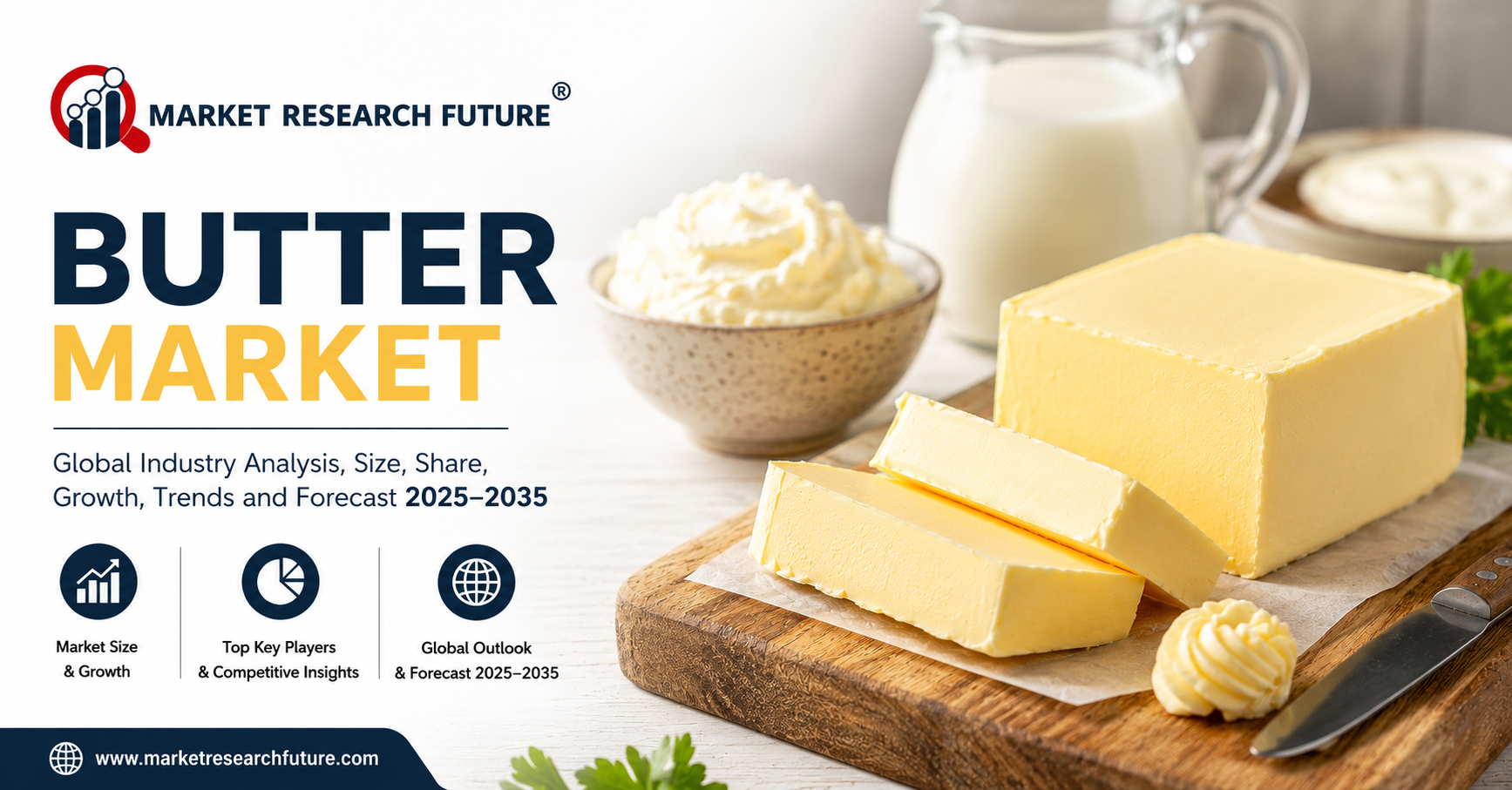
Butter Market Report
The market’s expansion is being fueled by growing consumer awareness regarding clean-label foods, increasing bakery and confectionery production, and the modernization of dairy supply chains across emerging economies. As consumers increasingly seek authentic, minimally processed food products, butter continues to gain preference over synthetic spreads and hydrogenated alternatives.
Rising Preference for Natural Dairy Products Reshaping Market Dynamics:
Consumers worldwide are moving toward natural and recognizable ingredients, leading to a resurgence in butter consumption. The growing rejection of artificial fats and heavily processed spreads has positioned butter as a preferred ingredient in both household and commercial applications. Premium and specialty butter products, including cultured butter, grass-fed butter, and clarified butter, are benefiting significantly from this transition.
The market is also experiencing notable growth from the bakery and confectionery sector. Butter remains a critical ingredient in pastries, cakes, cookies, croissants, and other baked goods, where its flavor profile and functional properties are difficult to replicate. The rapid expansion of Western-style bakery chains across Asia-Pacific countries is further contributing to demand growth.
Moreover, investments in dairy infrastructure, cold-chain networks, and milk processing facilities are enabling manufacturers to enhance production efficiency and ensure consistent supply. Government-backed dairy development programs in major producing countries are also supporting long-term industry growth.
Latest Trends Influencing the Butter Market:
1. Premiumization and Clean-Label Demand
One of the most influential trends shaping the butter market is premiumization. Consumers are increasingly willing to pay higher prices for products that offer superior quality, natural ingredients, and traceable sourcing. Premium butter varieties, particularly grass-fed and cultured butter products, are gaining substantial traction across developed markets.
2. Expansion of Bakery and Confectionery Applications
The growing popularity of artisanal bakery products and premium desserts is driving greater utilization of butter in food manufacturing. Rising demand for high-quality pastries and baked goods is encouraging manufacturers to use butter as a key ingredient for flavor enhancement and texture improvement.
3. Foodservice Reformulation Initiatives
Restaurants, hotels, and quick-service chains are increasingly replacing margarine and synthetic spreads with real butter to meet consumer expectations for authentic ingredients. This shift is creating new opportunities for butter suppliers across foodservice distribution networks.
4. Growth of E-Commerce Distribution
Online grocery platforms and direct-to-consumer channels are transforming the distribution landscape. Improved cold-chain logistics and digital retail infrastructure are enabling butter manufacturers to expand their market reach and offer specialty products directly to consumers.
5. Sustainability and Environmental Labeling
Environmental responsibility is becoming a competitive differentiator in the dairy industry. Producers are increasingly investing in sustainable farming practices, regenerative agriculture, and carbon footprint reduction initiatives to meet evolving retailer and consumer expectations.
Key Market Drivers:
1. Increasing Demand for Premium Butter Products
The growing popularity of premium dairy products continues to be a major growth driver. Consumers are seeking enhanced flavor, authenticity, and superior quality, leading to increased demand for cultured and specialty butter offerings.
2. Expansion of Organized Dairy Supply Chains
Investments in dairy collection systems, processing facilities, and refrigeration infrastructure are strengthening supply chain efficiency and supporting market expansion, particularly in emerging economies.
3. Growing Consumption in Foodservice Industry
The foodservice sector remains a significant consumer of butter, with restaurants and hospitality operators increasingly emphasizing real butter in their menu offerings. This trend is expected to contribute substantially to future market growth.
4. Rising Urbanization and Income Growth
Urbanization and improving disposable incomes are encouraging greater consumption of packaged dairy products. Consumers in developing countries are increasingly purchasing branded butter products through organized retail channels.
Request Sample PDF: https://www.marketresearchfuture.com/sample_request/4393
Emerging Opportunities Across the Market:
1. Premium Ghee Expansion
Clarified butter, commonly known as ghee, is experiencing growing popularity beyond traditional consumption regions. Demand is rising in Western markets due to increasing awareness of its cooking versatility, extended shelf life, and alignment with wellness-focused dietary trends.
2. Private-Label Partnerships
Foodservice distributors and retailers are increasingly launching private-label butter products, creating new contract manufacturing opportunities for processors and dairy companies.
3. Direct-to-Consumer Sales Channels
The growth of digital commerce presents significant opportunities for specialty butter producers. Direct-to-consumer business models allow brands to engage consumers more effectively while offering premium and artisanal products beyond traditional retail channels.
4. Expansion into Emerging Markets
Rapid urban development, improving cold-chain infrastructure, and rising consumption of dairy products across Africa and other developing regions are creating favorable conditions for long-term market expansion.
Segment Analysis:
1. By Product Type
Salted butter represents the largest segment, accounting for approximately 42% of market revenue due to its widespread use in household cooking and foodservice applications. Cultured/European-Style Butter is emerging as one of the fastest-growing categories, supported by increasing consumer interest in premium and artisanal dairy products. Meanwhile, Clarified Butter/Ghee continues to experience strong growth driven by expanding global awareness and ethnic food consumption patterns.
2. By Distribution Channel
Supermarkets and hypermarkets remain the dominant sales channel, accounting for approximately 51% of market value. However, online and e-commerce platforms are projected to record the fastest growth due to improvements in refrigerated delivery capabilities and changing consumer purchasing behavior.
3. By End Use
Household and retail applications currently generate the largest revenue share, supported by everyday cooking and baking requirements. However, bakery and confectionery applications are expected to demonstrate the fastest growth, driven by increasing production of premium baked products and desserts globally.
Regional Analysis:
1. Europe
Europe leads the global butter market, accounting for approximately 38% of total market share in 2025. The region benefits from a long-established dairy culture, premium butter traditions, and strong consumer preference for high-quality dairy products. France, Germany, and Ireland remain major contributors to regional growth.
The region is also witnessing increasing demand for cultured and premium butter products, supported by protected designation programs and strong export activity.
2. North America
North America generated approximately USD 2.46 billion in market value during 2025. The region continues to benefit from growing consumer demand for clean-label foods, grass-fed dairy products, and premium butter varieties.
The United States represents the largest market within the region, driven by changing dietary preferences and increased use of butter in both retail and foodservice sectors.
3. Asia-Pacific
Asia-Pacific is projected to be the fastest-growing regional market, expanding at a CAGR of 6.8% through 2035. Rapid urbanization, rising disposable incomes, and growing demand for bakery products are driving regional growth.
India dominates the regional market, accounting for approximately 46% of Asia-Pacific consumption, supported by strong dairy production capabilities and widespread use of butter and ghee in traditional cuisine. China is also emerging as a major growth center due to expanding bakery and hospitality industries.
4. South America
South America reached approximately USD 0.73 billion in market value during 2025. Brazil remains the largest market within the region, supported by dairy sector expansion and modernization of food processing operations.
5. Middle East & Africa
The Middle East & Africa region is expected to grow at a CAGR of 5.1% through 2035. Rising urbanization, expanding retail infrastructure, and increasing demand from hospitality sectors are supporting market growth across the region.
Top Company Profiles:
The global butter market remains moderately fragmented, with several multinational dairy companies competing through product innovation, premiumization strategies, and distribution expansion. Key players include:
Lactalis Group
Arla Foods
Fonterra
Amul (GCMMF)
Land O'Lakes
Ornua (Kerrygold)
Saputo Inc.
Upfield Group
Savencia Fromage & Dairy
Miyoko's Creamery
These companies are focusing on expanding premium product portfolios, strengthening supply chains, investing in sustainable production practices, and increasing their presence in emerging markets.
Lactalis Group is one of the world's leading dairy companies with a broad portfolio of butter and dairy-based products. The company leverages its strong international presence and advanced processing capabilities to serve both retail and industrial customers across multiple regions.
Arla Foods maintains a significant position in the butter industry through its cooperative business model and focus on high-quality dairy production. The company emphasizes sustainable farming practices and continuously develops premium butter products to meet evolving consumer preferences.
Fonterra is a major dairy exporter with a strong footprint in international butter markets. The company benefits from its extensive milk supply network and focuses on supplying butter and dairy ingredients to food manufacturers, foodservice operators, and retail channels worldwide.
Amul (GCMMF) remains a dominant player in the dairy sector, particularly across Asia-Pacific. The company’s extensive procurement network, large-scale processing facilities, and strong brand recognition support its growing presence in butter and clarified butter product categories.
Land O'Lakes is a prominent dairy cooperative known for its diverse range of butter products. The company continues to invest in product quality, operational efficiency, and supply chain optimization to strengthen its competitive position in the North American market.
Ornua (Kerrygold) has established itself as a premium butter producer with a strong reputation for grass-fed dairy products. The company’s Kerrygold brand has gained significant popularity in international markets due to its focus on quality, taste, and authentic dairy sourcing.
Saputo Inc. operates a diversified dairy business with an extensive portfolio of butter and related dairy products. Through strategic acquisitions and global expansion efforts, the company continues to enhance its manufacturing capabilities and market reach.
Upfield Group participates in the butter and spreadable dairy segment through its focus on consumer-centric product development. The company emphasizes innovation and adapts its offerings to address changing dietary and lifestyle preferences.
Savencia Fromage & Dairy leverages its expertise in specialty dairy products to strengthen its butter portfolio. The company focuses on premium product positioning, quality assurance, and expanding its presence across international markets.
Miyoko's Creamery has gained recognition for its innovative approach to butter alternatives and specialty spread products. The company targets consumers seeking premium, artisanal, and differentiated offerings within the broader butter and dairy category.
Collectively, these companies are shaping the future of the butter market through continuous innovation, sustainability initiatives, premium product development, and expansion into emerging growth markets. Their strategic focus on meeting evolving consumer expectations is expected to play a crucial role in supporting long-term market growth.
Recent Developments:
January 2025: Ornua’s Kerrygold brand reported significant growth in the North American market and expanded its portfolio of grass-fed butter products to strengthen its premium positioning.
November 2024: Amul commissioned a major butter and ghee processing facility in Gujarat, significantly enhancing production capacity and strengthening its manufacturing network.
July 2024: The USDA revised its Dairy Margin Coverage program, providing greater financial protection for dairy producers and supporting butter production economics.
April 2024: Lactalis Group expanded its Eastern European operations through the acquisition of a majority stake in a Bulgarian dairy cooperative, increasing regional production capabilities.
February 2024: Fonterra entered a long-term supply agreement with a leading Chinese bakery chain, reinforcing its presence within the rapidly expanding Asia-Pacific bakery sector.
Future Outlook:
The global butter market is expected to maintain healthy growth momentum through 2035, supported by premiumization trends, rising demand for clean-label foods, and increasing consumption across bakery, foodservice, and household applications. Emerging opportunities in ghee, specialty butter products, sustainable dairy production, and e-commerce distribution are expected to reshape the competitive landscape over the coming decade.
As consumers continue prioritizing natural ingredients, authentic flavors, and premium food experiences, butter is expected to strengthen its position as a core ingredient across both developed and emerging markets. With the market forecast to reach USD 14.68 billion by 2035, industry participants are well-positioned to capitalize on evolving consumer preferences and expanding global demand.
Sagar Kadam
Market Research Future
+1 628-258-0071
sales@marketresearchfuture.com
Visit us on social media:
LinkedIn
Facebook
X
Legal Disclaimer:
EIN Presswire provides this news content "as is" without warranty of any kind. We do not accept any responsibility or liability for the accuracy, content, images, videos, licenses, completeness, legality, or reliability of the information contained in this article. If you have any complaints or copyright issues related to this article, kindly contact the author above.
